
Airrex diesel heater – steady warmth and real savings
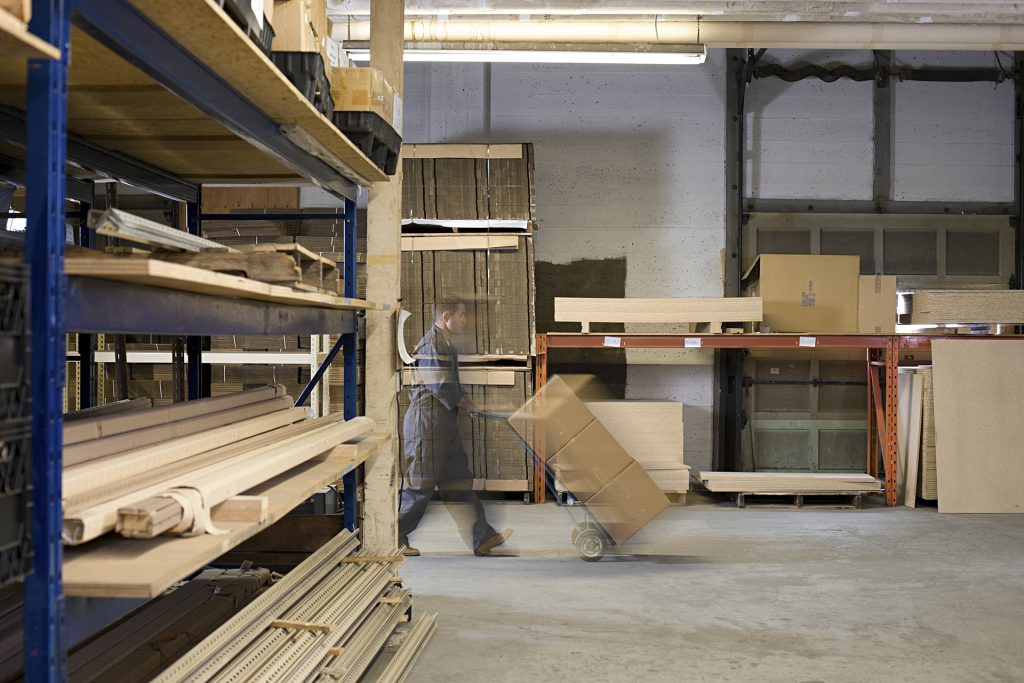
Good heating isn’t just about power. It’s also about cost efficiency – directing warmth exactly where it’s needed. Airrex diesel infrared heaters have proven in practice that consistent comfort doesn’t require high fuel consumption. The following examples show how Airrex heaters have helped keep heating costs in large industrial spaces under control – without compromising comfort. Proven results with infrared heating: only 2.5 litres per day Many are surprised to learn how little fuel Airrex diesel heaters actually consume. They’re designed to heat spaces effectively and evenly, without wasting energy where it isn’t needed. Grels Ström, a retired technical expert from Rex Nordic, uses an Airrex heater in his 480 m³ warehouse. The building has mineral wool insulation in the ceiling, plasterboard walls, and a concrete floor – a structure that stores heat efficiently. Previously, the warehouse was heated with direct electric heating, but switching to diesel brought a clear drop in both consumption and costs. Ström explains his experience: “At first, fuel consumption can be slightly higher. It usually takes about a week or a week and a half before it stabilises. Infrared heat is absorbed directly into the structures, and once they’re fully warmed, surprisingly little fuel is needed to maintain the temperature.” He keeps the warehouse at +15 °C when it’s around zero outside and has achieved remarkably low fuel consumption. Once the building is fully warm, daily consumption averages only about 2.5 litres of diesel. The Airrex heater has run reliably without problems and has required almost no maintenance. A slightly higher initial consumption is normal since building materials often contain moisture that must first dry out. Once dry, the system reaches its optimal efficiency. This is where Airrex infrared technology truly shines. The heat is stored within the structures and stays there. After that, only short heating cycles are needed to maintain a pleasant temperature day after day – and the savings show directly on the fuel bill. Smart thermostat keeps consumption low Every Airrex infrared heater comes with a built-in thermostat that helps minimise fuel consumption. The heater starts and stops automatically to maintain the desired temperature. Diesel is burned only when needed – and it’s metered precisely, no more than necessary, keeping consumption to a minimum. In practice, this means the heater works independently. Once the building’s structures have warmed up, the unit maintains the temperature with short operating intervals. There’s no need for constant adjustments – the thermostat does the work for you. Unlike traditional air-blowing heaters, Airrex units don’t push hot air to the ceiling or out the door when it’s opened. Infrared heat is directed straight into walls, floors, and machinery, which absorb and store it. As these structures retain heat, energy use remains exceptionally low. If a door is opened, the stored warmth quickly restores the indoor temperature. Long-term savings with Airrex diesel heaters Markku Ojanen has seen the difference first-hand. He heats a 1,080 m³ (360 m², 3 m high) insulated hall, which used to rely on radiators and fan heaters. The previous system consumed around 2,500 litres of oil per year. After installing an Airrex AH-300 diesel heater, the improvement was immediate. In the first winter alone, annual fuel use dropped to about 1,000 litres – less than half of the previous amount. He keeps the hall at a steady +9–10 °C, raising it to +13 °C while working. Over ten years of use, the savings have amounted to roughly €10,000–11,000, and the same heater continues to operate flawlessly. “Maintenance has been done on time, but no repairs have ever been needed,” Ojanen says. “It just keeps going.” Sustainable warmth you can feel Airrex infrared heating works on a simple yet powerful principle: instead of heating air, it radiates warmth directly into surrounding surfaces. Floors, walls, and objects absorb the heat – just like sunlight warms your skin. Once these surfaces are warm, they release heat evenly back into the air, maintaining a consistent indoor temperature. This stored warmth acts as a natural heat buffer, keeping fuel consumption low after the first weeks. The heater runs only as much as needed to maintain balance. That’s the key difference between infrared and traditional fan heaters. Infrared heat doesn’t escape when doors open or air circulates. The stored warmth in the structures quickly restores the temperature, keeping the heat where it’s needed and the savings ongoing. Site 1 – Warehouse Type: Warehouse 480 m³ Structure: Concrete floor, ceiling insulation, plasterboard walls Previous heating: Direct electric New solution: Airrex diesel infrared heater Maintained temperature: +15 °C in around 0 °C outdoor conditions Average daily fuel consumption: ~2.5 L diesel Maintenance: Reliable operation, almost no maintenance required Savings: Significantly lower consumption than the previous system Site 2 – Industrial hall Type: Insulated hall 1 080 m³ (360 m², 3 m height) Previous system: Radiators + fan heaters Previous fuel use: ~2,500 L oil/year New solution: Airrex AH-300 diesel heater Current fuel use: ~1,000 L/year Usage time: 10 years Estimated savings over 10 years: ~€10,000–11,000 Reliability: Same heater still running flawlessly, no repairs needed
Flexible local cooling for expanding Swedish company
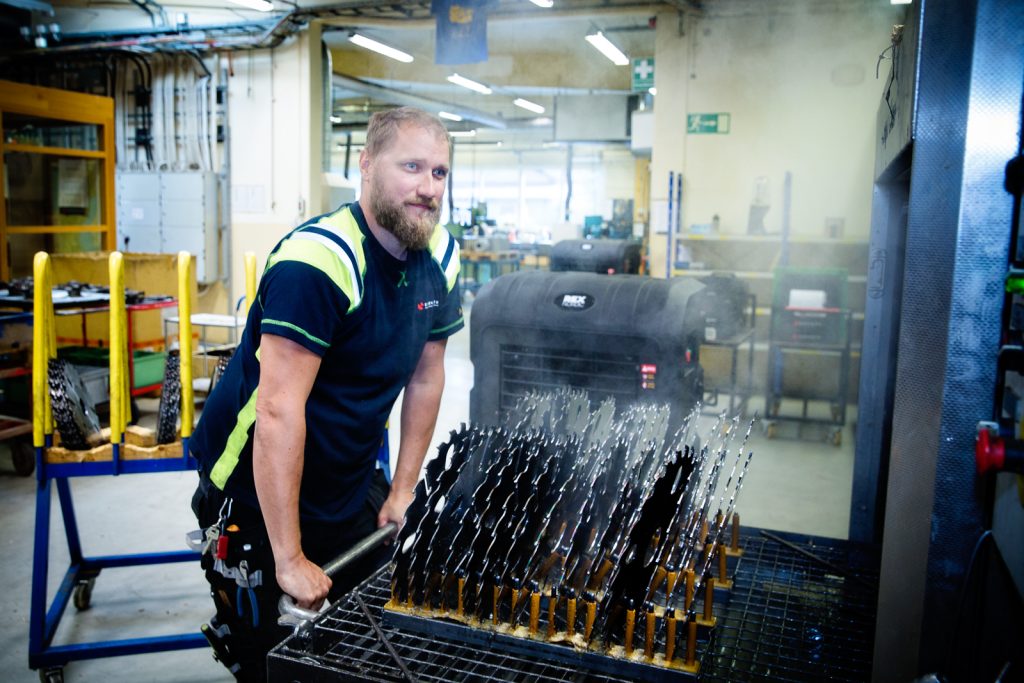
When the summer sun burns on the 4,700 m² workshop roof at the company Kvarnstrands in Småland’s Ekenässjön, 8 REXNORDIC Coolers now keep the temperature in the premises at a pleasantly cool level. Inside the workshop of the family company Kvarnstrands, 50 of the total of 95 employees work at several different machines to manufacture and sharpen top-class cutting tools for the wood industry in Europe. The machines used are CNC machines, washing machines, oil purifiers, and robots. In recent years, the business has grown, and with more heat-generating machines in the premises and with restrictions on ventilation on the facade, the indoor climate during the summer months has become a challenge for the company and its employees. Maintenance manager Alexander Sellman did careful research on which cooling solutions could work for the company’s needs – today and also in the future. -Our business is constantly developing, and we need a flexible solution for cooling the premises, says Alexander, who has worked at Kvarnstrands for 17 years. Based on changed EU regulations in the future, the choice of cooling medium was an important issue for us to take into account. Kvarnstrands took help from Rex Nordic’s technical sales advisor in Sweden, Jon Lindahl, to find the best solution for their conditions. The choice fell on 8 REX14000, which are deployed in strategic locations in the premises. -We are noticing that many companies in the manufacturing industry have the same challenges, and it is very rewarding to be able to assist with affordable solutions with the launch of the Eco series, says Jon Lindahl. Kvarnstrands was founded in 1939 in Ekenässjön and the business premises have been expanded several times since then. To be able to shop locally was an important factor in why the choice fell on RexNordic. -We prefer to shop from our neighbors and here we were able to buy the machines through Axima in Vetlanda and get good and fast help and support from a Swedish salesperson, says Alexander. At Kvarnstrands, the evaporative coolers are running throughout the working hours. And the employees have found clever ways to keep the tanks filled and maximize the cooling effect. -We exercise our fire hoses and fill the coolers directly with them, says CNC technician Violand Tiku, who also puts a few ice cubes in the water to get extra efficient cooling when the outside temperature reaches above 30 degrees Celsius. The coolers were delivered just a couple of weeks ago and the employees are already experiencing less heat stress. -Yes, there is a big difference and it is very nice with the cooler air, says Sara Vilhelmsson, CNC operator. Another advantage is that the coolers are energy efficient, the REX14000 model draws only 510W, and can easily be connected to a standard 10A outlet in the room. Violand Tiku has a REX14000 placed about 10 m away and he appreciates the coolness a lot. -It’s really great, he says enthusiastically. Previously, I only had two normal room fans in this corner, but with the coolers’ adjustable fan I can adjust the airflow myself and adapt it based on the outside temperature. Jon Lindahl sees an increasing interest in evaporative coolers in many different businesses, including in milk production and the entertainment and event industry. -These coolers really create many great opportunities for RexNordic to reach new customer groups and I look forward to continuing to develop sales, he says. Contact sales to to hear more
How a European stable keeps horses cool and comfortable with REX14000
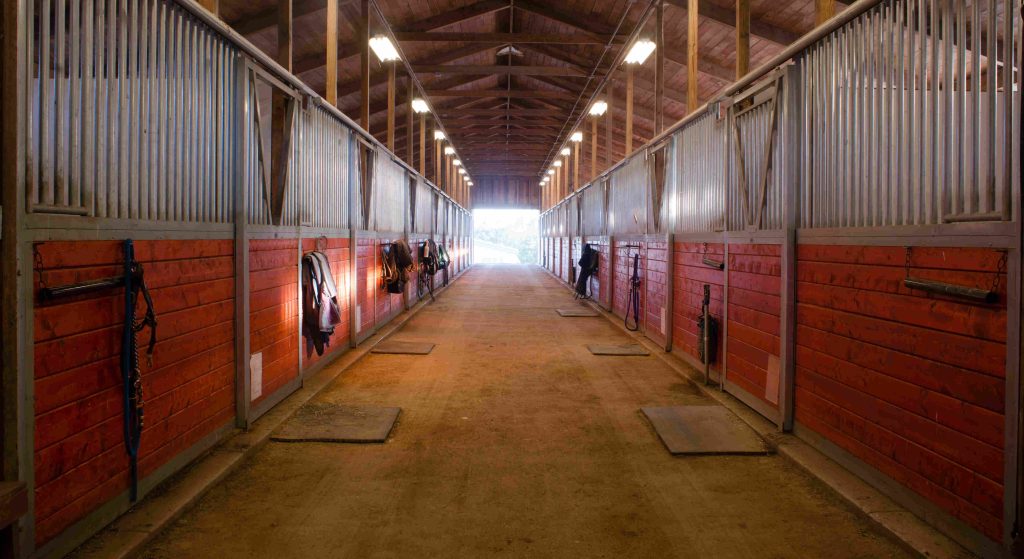
Key highlights Up to 12°C cooling: Ensures comfort for horses during hot days. Safe and chemical-free: Evaporative cooling using water with optional ice cubes. Quiet operation (55 dB): Maintains calm in animal environments. Portable and compact: Easy to move around stables and arenas. Enhanced worker comfort: Cooler conditions for stable staff. Proven versatility: Larger REX Nordic models, like the REX25000, deliver excellent results in outdoor fields, reducing heat and deterring horseflies. Battling summer heat in horse stables During the hot summer days, when temperatures inside horse stables can soar above 30°C (86°F), the environment often becomes uncomfortably hot, causing stress for the animals and disrupting their routine. To ensure optimal conditions for the horses’ well-being, a horse stable in Europe decided to try the REX14000 Air Cooler to solve the issue. Understanding the cooling challenges in stables The stable faced extreme temperatures and humidity that affected the horses’ comfort and performance. Traditional cooling solutions, such as fans or air conditioning, presented challenges: fans often require large units that take up valuable space and are not efficient at cooling since they merely recirculate the existing hot air. Air conditioning systems, while effective, are typically impractical and expensive in a stable environment. How REX14000 solves the heat problem in horse stables The REX14000 was chosen for its portability, lightweight design, quiet operation, and ease of use. It requires both an electricity connection and a water supply, which can be either a direct connection or filled manually. The unit provides up to a 12°C cooling effect depending on the ambient temperature. Using natural evaporative cooling, it ensures safety for both animals and handlers. Good air circulation, such as open windows or proper ventilation, is recommended to maintain balanced humidity levels. The quiet operation, at around 55 dB, ensures horses remain calm and unbothered by the cooler’s presence. Unlike standard fans, which merely move existing hot air around, the REX14000 delivers real cooling by introducing a fresh, cooled airflow. Its compact design occupies minimal space, making it ideal for busy stables and arenas. Cooling in action: Horses’ reactions and staff feedback After implementation, the stable manager reported a noticeable difference in the horses’ behavior. Horses were visibly more relaxed, some even choosing to stand near the cooler’s airflow. The improved comfort led to more effective training sessions and better overall animal welfare during the hottest months. Importantly, the stable staff appreciated the unit’s portability, allowing it to be repositioned between stables, arenas, and grooming areas as needed. The stable workers were also pleased to work in conditions that were much cooler and more comfortable. Why REX14000 is a must-have for horse stables The REX14000 Air Cooler proved to be a reliable and animal-friendly solution for keeping horse stables cool and comfortable during the summer heat. By providing a safe, quiet, and effective cooling method, it contributed to improved animal welfare and performance. In addition to the REX14000, some stables in Europe have tested REX Nordic’s larger air coolers, such as the REX25000, in outdoor stable settings with excellent results. The powerful airflow from these larger units not only provided significant cooling but also helped deter horseflies, which are a common nuisance for horses in fields. Some horses even spent time next to the air coolers, enjoying both the cooling effect and the reduced presence of biting flies. This reinforces the value of REX Nordic’s air cooling solutions for both indoor and outdoor equine environments. This case highlights REX14000’s versatility not only for horse stables but also for any animal facilities or workspaces needing efficient, chemical-free cooling.