
A Cooler Barn Supports Stable Milk Production in Summer
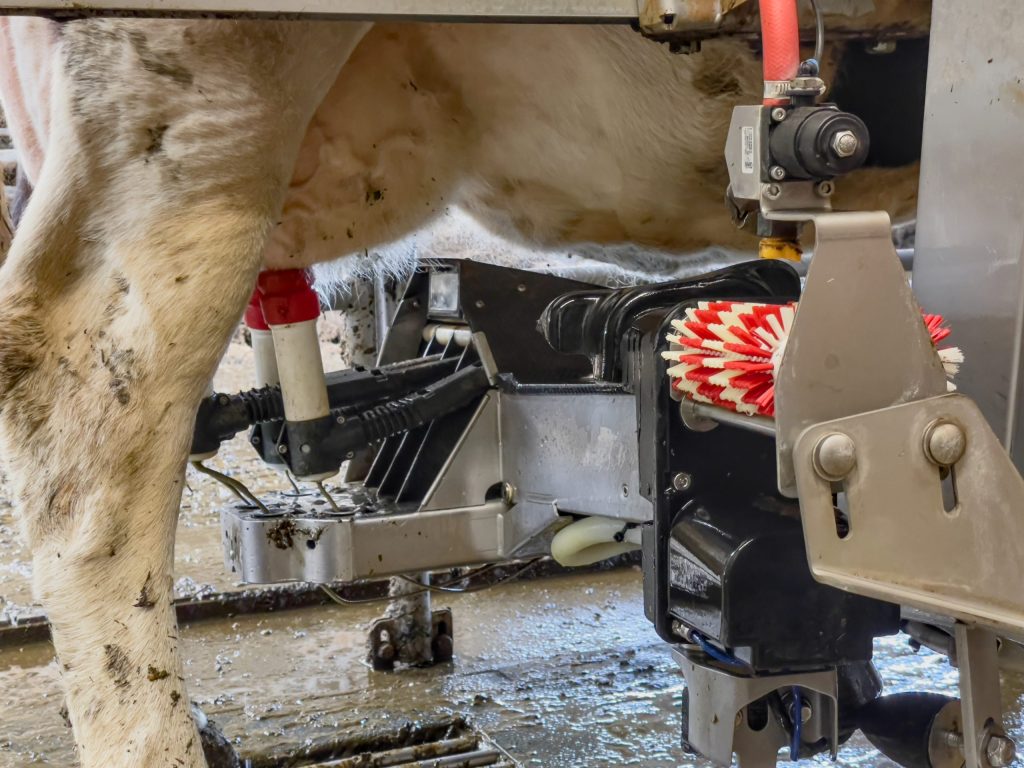
In brief Heat stress reduces cow welfare and milk yield during hot periods. The HP-19 air conditioning unit provides targeted cooling in barns without fixed installations. Cooler and drier indoor air supports feed intake, resting behaviour, and a steady milking rhythm. The solution is flexible and easy to move between different spaces and needs. Summer heat often becomes visible on dairy farms first in animal behaviour – and eventually in the milk tank. As temperatures rise, even small changes in barn conditions can affect how cows eat, rest, and attend milking. Heat is therefore one of the key challenges on dairy farms, influencing both milk production and animal welfare. Targeted cooling with the Rex Nordic HP-19 air conditioning unit offers a practical way to manage the effects of heat waves in everyday farm operations. Heat stress can occur at surprisingly low temperatures Heat stress is often thought to be a problem only during extreme heat waves. However, research and expert assessments show that dairy cows may begin to suffer from heat stress already when barn temperatures rise to around +20 °C, especially when humidity levels are high. In these conditions, cows must use energy to regulate body temperature instead of directing it toward feed intake and milk production. As outdoor temperatures increase, livestock buildings tend to warm up quickly but cool down slowly. This means that heat stress thresholds are easily exceeded indoors even during short heat spells, and the effects may persist after outdoor temperatures drop again. For dairy cows, the optimal temperature is below +18 °C. When temperatures rise above +20 °C, cows begin to reduce feed intake and rumination, which quickly leads to lower milk yields, particularly in high-producing cows. Production losses are quickly reflected in farm economics The effects of heat stress are not limited to prolonged heat waves. Studies show that even short periods of heat can reduce milk yield by several litres per cow per day. During extended hot periods, production losses of up to 4–5 kg per cow per day have been observed. In exceptionally warm years, the number of hot days in Finland can rise into the dozens. For example, in 2018 there were around 40 hot days in southern Finland and about 20 in Lapland. In many regions, milk yields remained below normal for up to four months, from May through August. Targeted cooling is a practical solution for barn conditions The Rex Nordic HP-19 air conditioning unit offers a practical solution when efficient yet flexible cooling is needed without permanent installation. Designed for professional use, the unit is well-suited for environments where heat load varies throughout the day. Cooler and drier conditions for the animals The HP-19 produces cool, dehumidified air and allows it to be directed precisely where it is needed via separate exhaust air ducts. In a barn, this may include milking robot waiting areas, feed table edges, or resting zones where cows spend most of their time. Research indicates that targeted cooling in animal living areas is more effective than cooling an entire building, as it directly affects feed intake and resting time. By directing cool air to the right locations, effective results can be achieved without cooling the whole structure. This makes the solution energy-efficient and easily scalable for barns of different sizes. If necessary, multiple units can be placed in different parts of the building according to heat load. Cow behaviour reveals the success of cooling Based on farm experience and research, the benefits of cooling are quickly reflected in cow behaviour. Heat stress reduces resting time and feed intake, which directly impacts milk production. When indoor air remains more comfortable even during hot days, cows do not need to spend energy on cooling their bodies. They eat more normally and rest longer, reducing the negative effects of heat stress and helping maintain more consistent production levels. A cooler indoor environment also encourages cows to return indoors during warm nights, helping to stabilise the milking rhythm and improve overall utilisation of the milking system. Drier air supports indoor air quality and udder health High temperatures combined with high humidity place additional strain on animals and degrade indoor air quality. Heat stress has been shown to increase somatic cell counts, which are often associated with compromised udder health. Mastitis can reduce the milk yield of an affected cow by 4–10 percent. According to studies, somatic cell counts are typically highest in late summer. The HP-19 removes moisture from the air during operation, helping to keep barn air fresher and more comfortable for both animals and staff. Condensed water is collected in the unit’s internal tank, with emptying being the only regular maintenance required. Better conditions for people as well Working in barns during hot weather is demanding for people too. Targeted cooling improves comfort in milking areas, feeding zones, and service spaces. As heat load decreases, endurance improves and the working environment becomes safer and more pleasant. An effective response to summer heat challenges The Rex Nordic HP-19 provides a fast and practical way to improve barn conditions when temperatures rise. Targeted cooling, humidity control, and portability make it a versatile solution for a wide range of agricultural environments. When animals feel better, production remains more stable – and working conditions improve at the same time. The cost of heat stress on a dairy farm Example farm: 100 lactating cows When the barn’s average daily temperature remains above +20 °C: Milk yield may drop by 4–5 litres per cow per day Total production loss: 400–500 litres per day Per month (30 days): 12,000–15,000 litres less milk Average producer milk price (May–July 2023): €0.5135 per litre Economic impact: Per day: €205–257 Per month: €6,156–7,700 The calculation is based on production losses observed in research and academic studies on heat stress (Hulsen 2009; Holma 2020; Jääskeläinen 2020).
Airrex Diesel Heaters Power a Scottish Rally Workshop

A professional rally team in Scotland heats its workshop with three Airrex diesel infrared heaters, the oldest in use for ~12 years. Fuel consumption is extremely low and noticeably lower than their previous noisy, smelly diesel blowers. Reliability is described as “fantastic,” with minimal maintenance needed. The heaters are also transported to international rally events to keep service areas warm. In the Scottish Borders, where cold, damp winters are a part of daily life, a professional rally team has built a workshop environment that keeps pace with the demands of world-level motorsport. Their facility in Kelso includes several work areas: the main workshop, a dedicated transmission and engine rebuild room, and a paint shop. Much of the building is insulated, helping maintain stable temperatures during intensive winter workloads. The team runs a full rally car programme, building, preparing, repairing, and rebuilding modern machines that compete in championships across the world. Reliability, precision, and properly controlled working conditions are essential — both for the crew and the cars. Twelve Years with Airrex Infrared Heaters The workshop operates three Airrex diesel infrared heaters, the oldest of which has been running for around 12 years, still performing without issues. According to owner Dommy Buckley, Airrex stood out immediately: “They’re a class apart. Very economical and so clean burning. You can’t get better.” The heaters are used seasonally but continuously throughout the winter, from October to April, non-stop every day. The team even transports their diesel heaters to colder international rally events in France, Finland, and Norway, relying on them to keep service areas warm in harsh outdoor conditions. Stable Heat from a Space Heater — Even with Doors Opening The workshop features a gable-top roof with a high peak, which can easily lead to rising heat loss. To compensate, the team uses a small air-blower fan to push warm air back down to the work area. Together with Airrex’s infrared heating technology, it keeps the space warm and consistent even when doors are constantly opening. According to owner Dommy Buckley, “It works a treat.” Fuel Efficiency That’s Hard to Believe Fuel consumption is one of the first things people ask about — and it’s also where the workshop has seen one of the biggest differences. When talking about it, Buckley can’t help but laugh: “It’s like nothing! Honestly… we’re a spreadsheet-free environment, but it’s easy to work out they’re efficient.” Airrex diesel infrared heaters are designed to use far less fuel than traditional blown-air diesel units, and the team sees this daily in both their running costs and overall comfort. Before switching to Airrex, they relied on older heaters that Dommy remembers all too well: “Terrible, noisy, smelly prehistoric machines.” The contrast was immediate. With Airrex, fuel use dropped sharply, the exhaust smell disappeared, and the workshop environment became quieter, cleaner, and far more pleasant to work in. Maintenance and Reliability of Their Diesel Heaters While the team has occasionally used a Service Kit, most of the maintenance today is handled by Rex Nordic’s Darren, whose expertise has made the whole process effortless. As Buckley puts it: “Darren’s skills are much better and easier to just get him to do it!” Reliability is another area where the heaters have stood out. When asked to summarise their performance over more than a decade of use at the workshop — and on the road — Dommy doesn’t hesitate: “F A N T A S T I C ……” The heaters require minimal attention, deliver consistent heat regardless of the environment, and have become a trusted part of the team’s operation. Dommy has recommended them widely: “I’ve recommended them to a lot of people. All spaces — they work anywhere, really.” From insulated workshops to temporary outdoor service zones at international rally events, Airrex diesel infrared heaters have proven to be dependable partners wherever the team goes. Motorsport Workshop (Scotland) Type: Rally car workshop Structure: Mostly insulated, gable-top roof Heating: Three Airrex diesel infrared heaters (oldest ~12 years) Usage: Daily from October–April Previous heating: Noisy, smelly, blown-air diesel units Fuel use: Very low (“like nothing”) Reliability: Excellent, trouble-free Maintenance: Minimal; serviced by Rex Nordic technician Extra use: Taken to rally events abroad
Flexible local cooling for expanding Swedish company
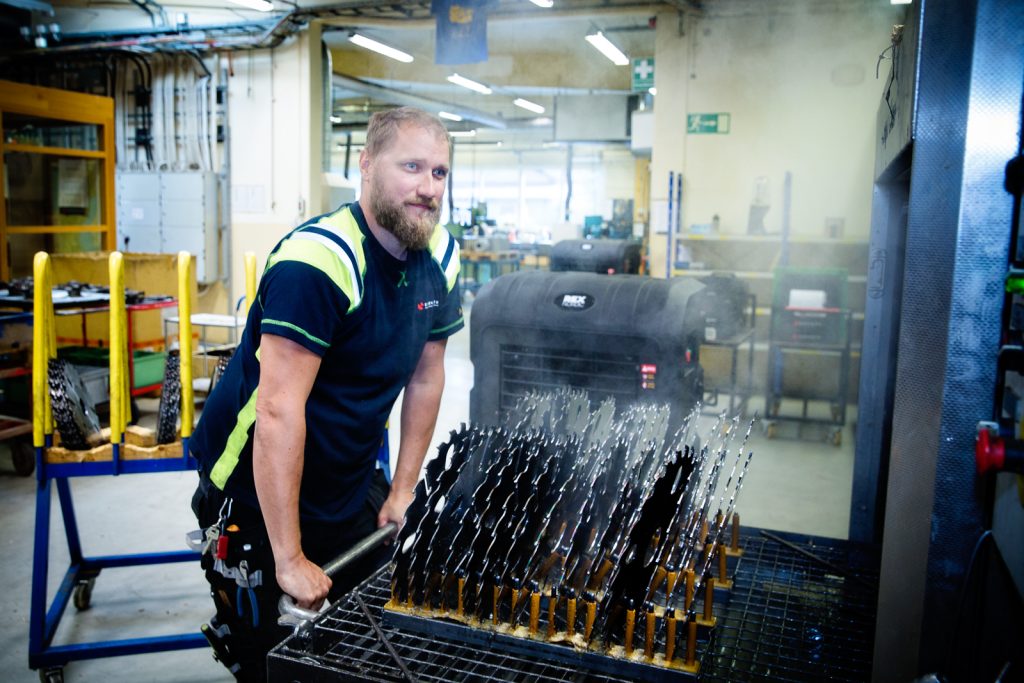
When the summer sun burns on the 4,700 m² workshop roof at the company Kvarnstrands in Småland’s Ekenässjön, 8 REXNORDIC Coolers now keep the temperature in the premises at a pleasantly cool level. Inside the workshop of the family company Kvarnstrands, 50 of the total of 95 employees work at several different machines to manufacture and sharpen top-class cutting tools for the wood industry in Europe. The machines used are CNC machines, washing machines, oil purifiers, and robots. In recent years, the business has grown, and with more heat-generating machines in the premises and with restrictions on ventilation on the facade, the indoor climate during the summer months has become a challenge for the company and its employees. Maintenance manager Alexander Sellman did careful research on which cooling solutions could work for the company’s needs – today and also in the future. -Our business is constantly developing, and we need a flexible solution for cooling the premises, says Alexander, who has worked at Kvarnstrands for 17 years. Based on changed EU regulations in the future, the choice of cooling medium was an important issue for us to take into account. Kvarnstrands took help from Rex Nordic’s technical sales advisor in Sweden, Jon Lindahl, to find the best solution for their conditions. The choice fell on 8 REX14000, which are deployed in strategic locations in the premises. -We are noticing that many companies in the manufacturing industry have the same challenges, and it is very rewarding to be able to assist with affordable solutions with the launch of the Eco series, says Jon Lindahl. Kvarnstrands was founded in 1939 in Ekenässjön and the business premises have been expanded several times since then. To be able to shop locally was an important factor in why the choice fell on RexNordic. -We prefer to shop from our neighbors and here we were able to buy the machines through Axima in Vetlanda and get good and fast help and support from a Swedish salesperson, says Alexander. At Kvarnstrands, the evaporative coolers are running throughout the working hours. And the employees have found clever ways to keep the tanks filled and maximize the cooling effect. -We exercise our fire hoses and fill the coolers directly with them, says CNC technician Violand Tiku, who also puts a few ice cubes in the water to get extra efficient cooling when the outside temperature reaches above 30 degrees Celsius. The coolers were delivered just a couple of weeks ago and the employees are already experiencing less heat stress. -Yes, there is a big difference and it is very nice with the cooler air, says Sara Vilhelmsson, CNC operator. Another advantage is that the coolers are energy efficient, the REX14000 model draws only 510W, and can easily be connected to a standard 10A outlet in the room. Violand Tiku has a REX14000 placed about 10 m away and he appreciates the coolness a lot. -It’s really great, he says enthusiastically. Previously, I only had two normal room fans in this corner, but with the coolers’ adjustable fan I can adjust the airflow myself and adapt it based on the outside temperature. Jon Lindahl sees an increasing interest in evaporative coolers in many different businesses, including in milk production and the entertainment and event industry. -These coolers really create many great opportunities for RexNordic to reach new customer groups and I look forward to continuing to develop sales, he says. Contact sales to to hear more
Vantaa Gym Gets Cooler and Fresher with EcoCooler
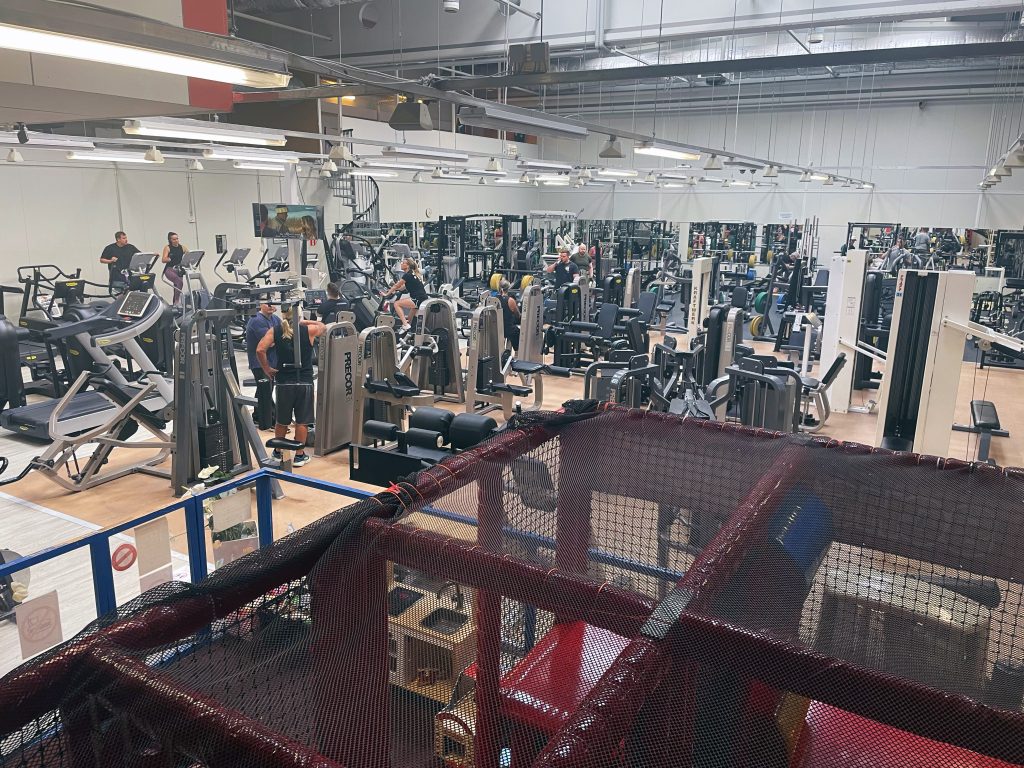
In Havukoski, Vantaa, the Vantaa Gym Club acquired a Rex Nordic EcoCooler at the beginning of summer 2024. Customers of this family business, which has been operating for over 30 years, immediately noticed from the first days that the air in the gym was pleasantly cooler and fresher than before. Vantaa Gym has a gym area of 600 square meters with a height of over six meters. The company purchased a mid-sized REX25000 model from Rex Nordic’s EcoCooler range, which has an air flow of up to 25,000 cubic meters per hour. The cooling capacity of the movable EcoCoolers is heavily based on the evaporation of cold water through a honeycomb pad. The advantages of the cooler include efficient cooling without water mist, large air flow, low energy consumption, and no installation costs. “There is a clear temperature difference in the hall when the EcoCooler is in use. Customers have praised how pleasantly cooler and fresher the air is”, says Mika Holappa, owner of Vantaa Gym. At Vantaa Gym, the REX25000 was placed on the second floor in the treatment room, from where the cooler blows into the gym through an open interior window. This way, the cooler did not need to be placed among the gym equipment or people, and the cool air spread widely in the hall as it fell down. “We really didn’t have the opportunity to acquire any other solution for our premises. We rent from the city, and in the same “hectare-sized” hall there are other businesses, so we cannot, for example, install fixed cooling solutions. At first, I thought of buying ten smaller fans scattered around the hall, but then I discovered the EcoCooler on the internet and decided to try it.” “When the sun shines strongly through the skylights, the hall has been extremely hot and, at worst, felt like “the oxygen is running out”. There is basic ventilation in the hall, but it is not sufficient in hot weather. It helps to circulate the air and push cool air down while also bringing replacement air into the room, but nevertheless, the EcoCooler has done its job. In cooler weather, I have had it on half power. When it has been warmer, the fan has been on full power.” In addition to the REX25000, Rex Nordic’s EcoCooler range includes the smaller REX14000 and the larger REX48000. They are designed for different sizes of rooms, run on standard power, and do not require fixed installation or electrical work. Water directly from the hose to the tank The REX25000 has practically been constantly connected to the water supply at Vantaa Gym, which means that cold water has been constantly flowing into the EcoCooler tank. The water has been consumed in moderate amounts relative to the benefit, and there have been no humidity problems due to the EcoCooler in the hall. The water evaporates from the EcoCooler; it does not spray or cause water mist. “In hot weather, the water is constantly on. I also tried the cooler by simply filling the tank. In that case, the tank (170 litres) used water in 8-10 hours”, estimates Holappa. The open and bright Vantaa Gym has a versatile gym with modern equipment, where professional guidance is available if desired. At Vantaa Gym, one can also purchase gym programmes as well as personal training, physiotherapy, massage, and nutrition advice. The gym also allows for boxing or focusing on stretching exercises. There is a traditional sauna in the men’s changing room and an infrared sauna on the women’s side. There is also a play area for children. “It is important for us to listen to our customers and purchase equipment according to their wishes and needs. Our gym is accessible via an app around the clock every day. One can also purchase only the services needed, even for a single visit in the middle of the night. We do not bind our customers to anything.” Vantaa Gym is located at Hosantie 2, Vantaa. Vantaa Gym Club https://vantaagym.fi
Melting snow and ice with Airrex AH-800 heater
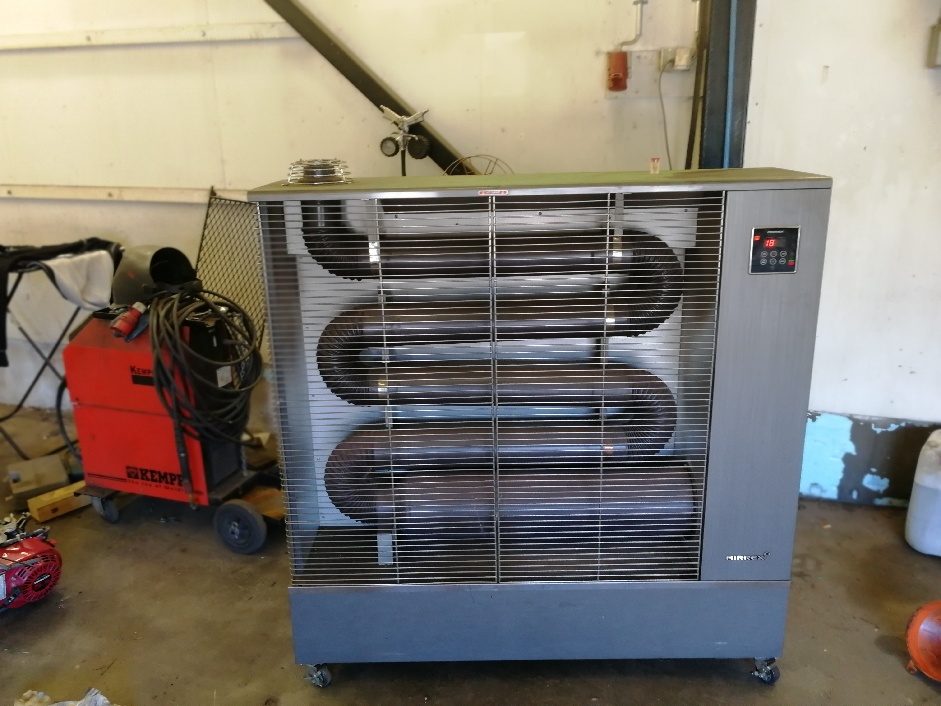
Founded in 1995, Amados Oy is specialised in the marketing and sales of machines related to construction, agriculture and property maintenance in Finland and Russia. The heater Airrex AH-800 was acquired to heat Amados’ workshop hall approximately 2.5 years ago, and it has been in heavy use ever since. Mikkeli-based Amados’ hall is 5–6 metres high and spans approximately 150 square metres, and various working machines are washed there throughout the year. At worst, half a metre of snow may pile up on top of vehicles such as wheel loaders and tractors in winter when they are driven to the hall for washing. “It only takes around three hours to deal with a large amount of snow and ice until it’s all melted away. The heater is in heavy use at that point, but it works superbly,” says Jari Ikonen from Amados. Previously, hot-air blowers were used for heating in Amados’ hall but, according to Ikonen, they were susceptible to becoming dirty. Airrex has no such issues. The diesel-powered infrared heater AH-800 is in continuous use at Amados in the cold season, and 800 litres of fuel is consumed annually. The heater is in heavy use, indeed. READ MORE ABOUT AH-800
Airrex AH-300 helped cut a garage’s costs significantly
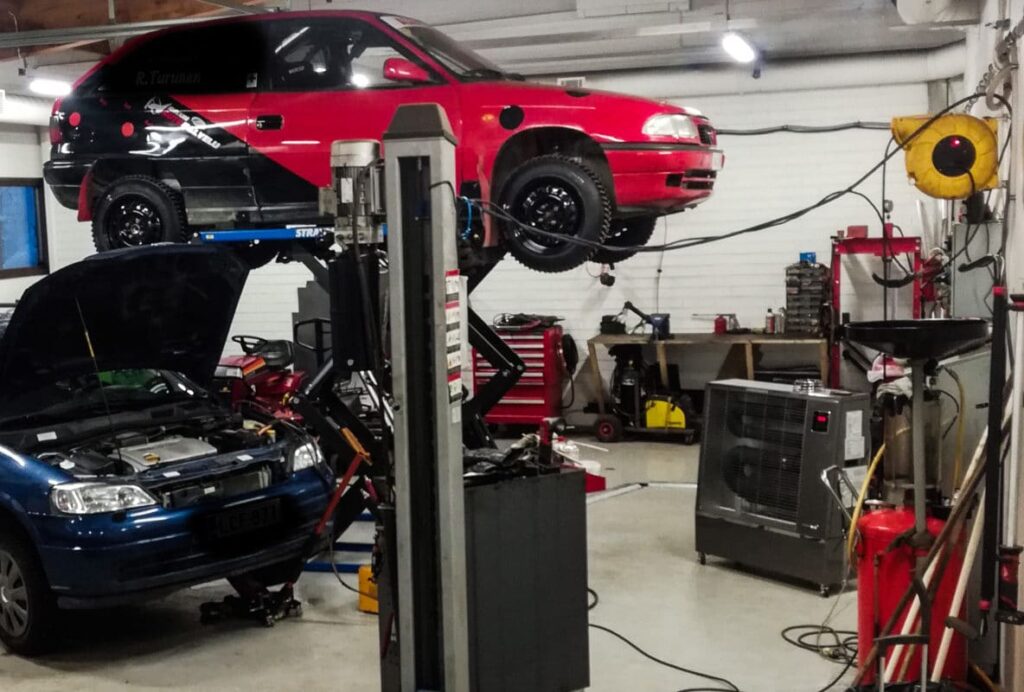
Two years ago, Riku Turunen from Kontiolahti was considering the heating costs of his industrial hall. It consumed a lot of power and the bills really reflected that. Things had to change in a sensible manner. Riku’s garage hall is 135 square metres in size, and the highest point of the roof is at four metres. The large roll-up doors are prone to waste heat, so the task was a challenging one. Airrex AH-300 was selected as the heating device. AH-300 is an almost odourless, diesel-powered infrared heater with a 100% efficiency that is very well suited for industrial halls such as Turunen’s garage. Practice showed instantly that Airrex was a great solution because the device was easy to use as well as cost-efficient. “I must say that over the past two years, I’ve noticed how reliable and easy this device is to use. It’s mainly been in one place, and I’ve had no need to do anything to it although I’m using it all the time.” Besides convenience, savings are playing an important role now. “Earlier, if a period of, say, three weeks incurred an expense of a little more than €680, now I’m only spending €370, fuel included. Annually, that’s quite a big sum of money,” Turunen ponders. Once again, all that was needed was one device to solve issues. Airrex AH-300 reduced heating costs, and Riku Turunen can now focus on the essential – conducting his business – without any worries. READ MORE ABOUT AIRREX AH-300
Terrace heater, hall heater and BBQ hut heater – Airrex AH-300
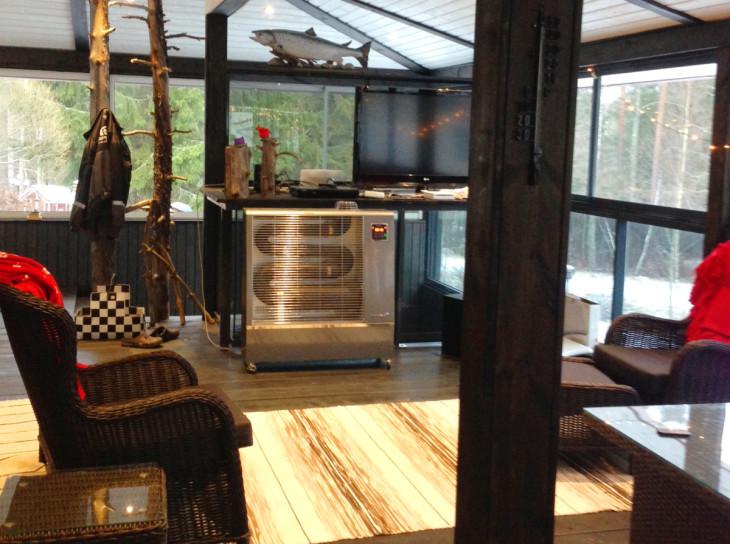
Harry Mäkelä has an impressive terrace in his house. Mäkelä uses his grill a lot in winter, so the Airrex infrared heater may be switched on from Friday until Saturday. “We used to use this duct-shaped fuel oil heater. We found its flame and blast slightly dangerous in terms of heating a BBQ hut constructed of log beams with a diameter of 20 cm. A few years ago, when my son acquired an infrared heater and put it by the door of a 200-square metre maintenance hall as a kind of an air curtain, I decided to get these devices for our personal use as well. In temperatures of 20 degrees below zero, we consume around one litre of oil per hour in the BBQ hut. The 2-storey terrace is 17 metres wide and 5 metres deep. One Airrex AH-300 heater is in the lower terrace and one is upstairs. When we had to start refuelling the old heater with fuel oil, the tank of the new heater, in comparison, remains almost half-full,” Mäkelä describes his experiences. In Mäkelä’s experience, an exhaust pipe is not necessary in a big terrace or even in a BBQ hut. The heater does not emit any smoke at all because the oil burns so cleanly. Switching off the heater only causes a small fizzling sound, after which you can smell fuel oil for a while. Mäkelä, however, reckons that the consumption and odour emissions of older Airrex infrared heaters could be reduced if at least their filters were replaced. The heaters have been used for 3–4 years without requiring any particular maintenance. “I can warmly recommend these heaters to everybody, I have been very satisfied with them,” Harry Mäkelä says, summing up his experience. READ MORE ABOUT DIESEL HEATERS
Flower friendly Airrex AH-300 infrared heater solves greenhouse heating problem
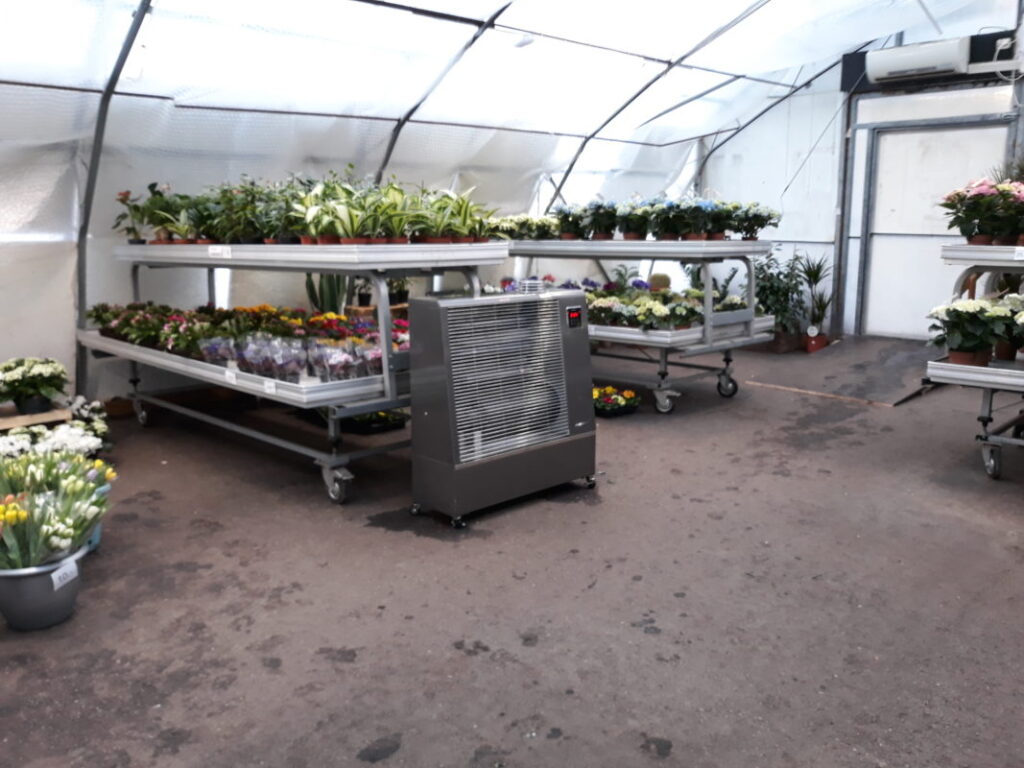
Three years ago, at the Munkkivuori Garden, it was considered how the premises would be kept warm and the flowers happy. The gas heater didn’t work, but the diesel-powered Airrex AH-300 was chosen as the right heating solution. The garden has a smaller store section and a larger greenhouse. The entire space is about 5 meters wide and 30 meters long. Initially, they purchased one heater, but very quickly they bought another to the store section. The product has been very easy to use and working perfectly. Now the company has even bought a third heater. – We have been very pleased with these infrared heaters. Two of them are constantly in use and the third is used when needed. On the greenhouse side, the heat is kept at just under ten degrees Celsius and then at the store again at 13-14 degrees Celsius, says store manager Aki Lahtinen. ”Cost-wise, I can say that Airrex is much cheaper than gas heaters” The AH-300 has a charm of comfort and the flowers are happy. The device is almost odorless and produces carbon dioxide, which is great in such an environment. The 15kW / h heating output is just optimal and the low fuel consumption has brought the desired cost efficiency. Workers do not have to worry about using the equipment, just refuel and let the heater do its job. – Yes, these are easy to use, all you have to do is refuel. In terms of cost, I can say that it is much cheaper than gas-fired heaters, says Lahtinen. The Airrex AH-300 has many things that make it easy to use in such spaces. It can be easily moved and does not require a separate exhaust pipe. It is almost odorless and does not make any noise. Infrared radiation heats the material instead of the air. No fan is needed so dust or other contaminants do not rise from the floor. All in all, the Garden has been very satisfied with Airrex heaters. The thermostat-controlled heater is set at the desired temperature and then everyone can concentrate on the essentials. Read more about AH-300
Airrex diesel heater – steady warmth and real savings
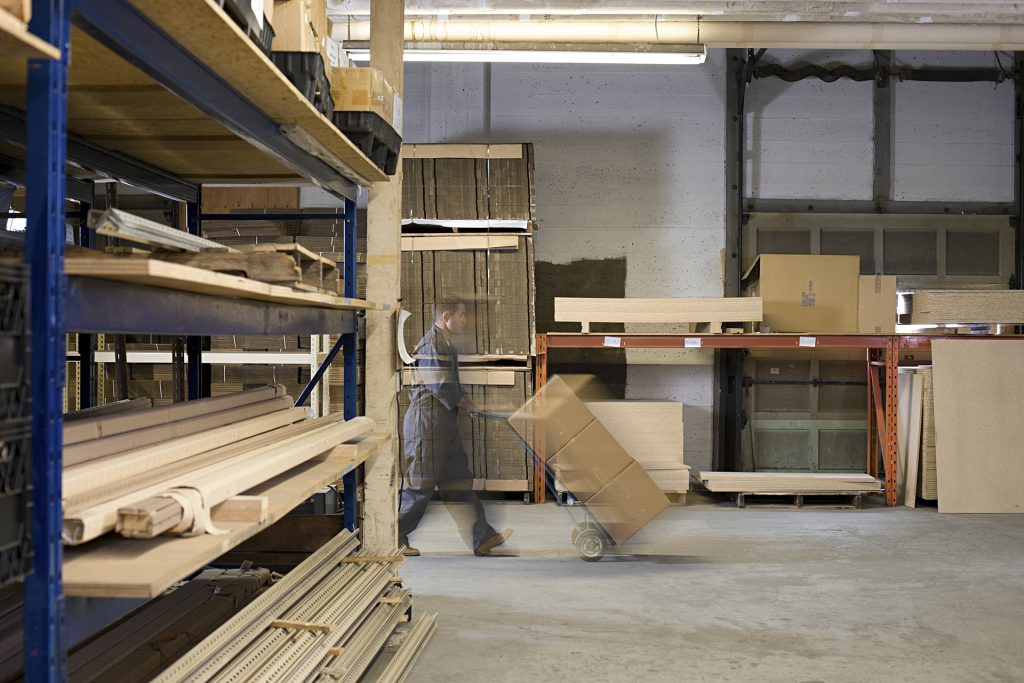
Good heating isn’t just about power. It’s also about cost efficiency – directing warmth exactly where it’s needed. Airrex diesel infrared heaters have proven in practice that consistent comfort doesn’t require high fuel consumption. The following examples show how Airrex heaters have helped keep heating costs in large industrial spaces under control – without compromising comfort. Proven results with infrared heating: only 2.5 litres per day Many are surprised to learn how little fuel Airrex diesel heaters actually consume. They’re designed to heat spaces effectively and evenly, without wasting energy where it isn’t needed. Grels Ström, a retired technical expert from Rex Nordic, uses an Airrex heater in his 480 m³ warehouse. The building has mineral wool insulation in the ceiling, plasterboard walls, and a concrete floor – a structure that stores heat efficiently. Previously, the warehouse was heated with direct electric heating, but switching to diesel brought a clear drop in both consumption and costs. Ström explains his experience: “At first, fuel consumption can be slightly higher. It usually takes about a week or a week and a half before it stabilises. Infrared heat is absorbed directly into the structures, and once they’re fully warmed, surprisingly little fuel is needed to maintain the temperature.” He keeps the warehouse at +15 °C when it’s around zero outside and has achieved remarkably low fuel consumption. Once the building is fully warm, daily consumption averages only about 2.5 litres of diesel. The Airrex heater has run reliably without problems and has required almost no maintenance. A slightly higher initial consumption is normal since building materials often contain moisture that must first dry out. Once dry, the system reaches its optimal efficiency. This is where Airrex infrared technology truly shines. The heat is stored within the structures and stays there. After that, only short heating cycles are needed to maintain a pleasant temperature day after day – and the savings show directly on the fuel bill. Smart thermostat keeps consumption low Every Airrex infrared heater comes with a built-in thermostat that helps minimise fuel consumption. The heater starts and stops automatically to maintain the desired temperature. Diesel is burned only when needed – and it’s metered precisely, no more than necessary, keeping consumption to a minimum. In practice, this means the heater works independently. Once the building’s structures have warmed up, the unit maintains the temperature with short operating intervals. There’s no need for constant adjustments – the thermostat does the work for you. Unlike traditional air-blowing heaters, Airrex units don’t push hot air to the ceiling or out the door when it’s opened. Infrared heat is directed straight into walls, floors, and machinery, which absorb and store it. As these structures retain heat, energy use remains exceptionally low. If a door is opened, the stored warmth quickly restores the indoor temperature. Long-term savings with Airrex diesel heaters Markku Ojanen has seen the difference first-hand. He heats a 1,080 m³ (360 m², 3 m high) insulated hall, which used to rely on radiators and fan heaters. The previous system consumed around 2,500 litres of oil per year. After installing an Airrex AH-300 diesel heater, the improvement was immediate. In the first winter alone, annual fuel use dropped to about 1,000 litres – less than half of the previous amount. He keeps the hall at a steady +9–10 °C, raising it to +13 °C while working. Over ten years of use, the savings have amounted to roughly €10,000–11,000, and the same heater continues to operate flawlessly. “Maintenance has been done on time, but no repairs have ever been needed,” Ojanen says. “It just keeps going.” Sustainable warmth you can feel Airrex infrared heating works on a simple yet powerful principle: instead of heating air, it radiates warmth directly into surrounding surfaces. Floors, walls, and objects absorb the heat – just like sunlight warms your skin. Once these surfaces are warm, they release heat evenly back into the air, maintaining a consistent indoor temperature. This stored warmth acts as a natural heat buffer, keeping fuel consumption low after the first weeks. The heater runs only as much as needed to maintain balance. That’s the key difference between infrared and traditional fan heaters. Infrared heat doesn’t escape when doors open or air circulates. The stored warmth in the structures quickly restores the temperature, keeping the heat where it’s needed and the savings ongoing. Site 1 – Warehouse Type: Warehouse 480 m³ Structure: Concrete floor, ceiling insulation, plasterboard walls Previous heating: Direct electric New solution: Airrex diesel infrared heater Maintained temperature: +15 °C in around 0 °C outdoor conditions Average daily fuel consumption: ~2.5 L diesel Maintenance: Reliable operation, almost no maintenance required Savings: Significantly lower consumption than the previous system Site 2 – Industrial hall Type: Insulated hall 1 080 m³ (360 m², 3 m height) Previous system: Radiators + fan heaters Previous fuel use: ~2,500 L oil/year New solution: Airrex AH-300 diesel heater Current fuel use: ~1,000 L/year Usage time: 10 years Estimated savings over 10 years: ~€10,000–11,000 Reliability: Same heater still running flawlessly, no repairs needed
Warmth that stays – Airrex heater keeps the workshop comfortable all winter
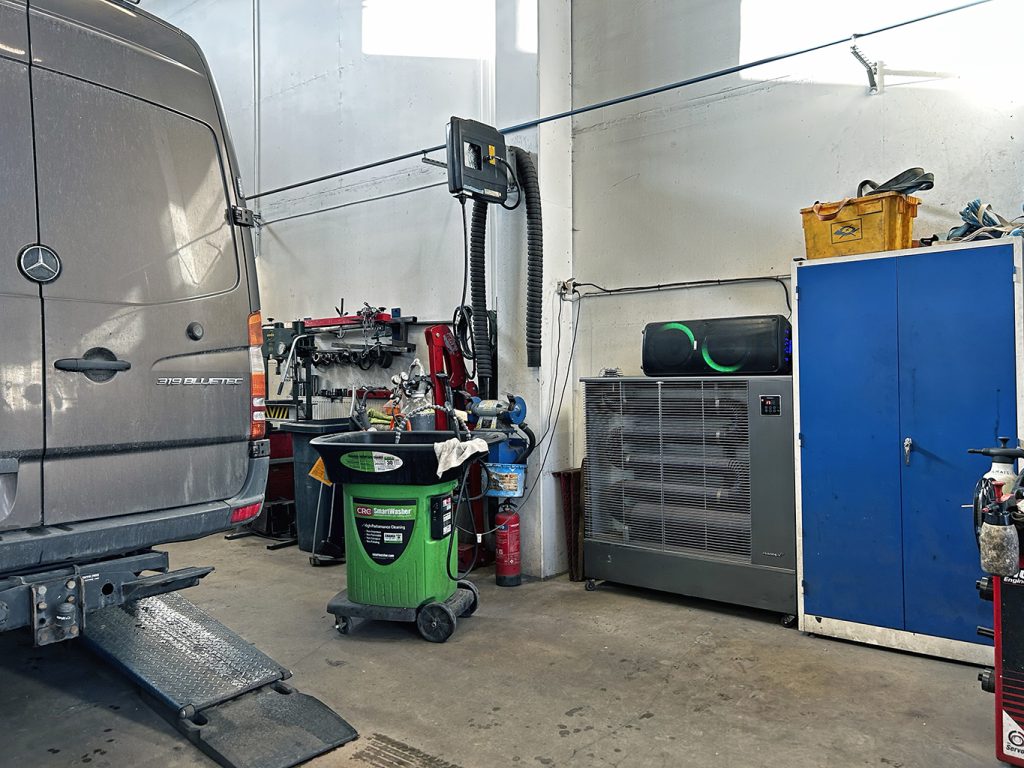
A 244 m² car repair workshop with six-meter-high ceilings is not the easiest space to keep warm during Finnish winters. Concrete walls, a partially insulated sheet-metal roof, and a frequently opened overhead door allow heat to escape easily. Thanks to the Airrex diesel space heater, the hall maintains a steady temperature of +16–17 °C throughout the winter. Janne Mukkala, owner of JM-Konehuolto Oy from Finland, has been using the Airrex heater for six years – and wouldn’t switch to anything else. “The heater has worked flawlessly. It starts automatically when the door has been open and the temperature drops, and it quickly brings the warmth back. Reliability is what I value most.” A fuel-powered heater that supports district heating in freezing weather Before installing the Airrex, the workshop’s temperature fluctuated constantly during the winter. District heating alone wasn’t enough to keep the workspace comfortable, especially when the overhead doors were opened in sub-zero conditions. The Airrex diesel space heater provided the extra boost that was missing. “Now we can open the door as often as needed without losing the indoor warmth,” says Mukkala. “Airrex works as a fuel-powered supplementary heater that reacts quickly to temperature changes and supports the district heating system.” An energy-efficient heater like Airrex is an excellent choice for garages or workshops where efficient, odorless heat is needed without complicated installation. At JM-Konehuolto, the unit is used daily throughout the winter season, sometimes even overnight. Airrex – easy to use and built to last The Airrex infrared heater has been operating in the workshop for six years without a single service need. “I’ve never had to do anything to it – it just works.” Thanks to its advanced oil burner technology and simple design, Airrex is nearly maintenance-free. The heater operates quietly and odorlessly, without smoke or fumes inside the building. We still recommend replacing the annual service kit to maintain optimal performance and energy efficiency year after year. A satisfied user – warm workshop, minimal effort Simple, reliable, and economical – that’s how many Rex Nordic customers describe the Airrex infrared heaters. “It has been the most reliable heating solution we’ve ever had,” says Mukkala. Airrex perfectly complements district heating and keeps the workshop warm all winter long, even though insulation isn’t perfect and the doors are opened frequently. Who is the Airrex diesel space heater for? The Airrex diesel space heater is ideal for garages, repair shops, warehouses, and workshops – any space that requires efficient heating and ease of use. Thanks to its mobility, the unit can be easily moved wherever warmth is needed. The fuel-powered heater also performs reliably in locations where electrical power is limited or traditional heaters fall short. Facts: JM-Konehuolto Oy, Finland Type of business: Car repair workshopFacility size: 244 m² | Height 6 mStructure: Concrete walls and floor, partially insulated metal roofHeating solution: District heating + Airrex AH-800i diesel space heaterUsage: Daily during winter, occasionally overnightIn operation: 6 years | No maintenance requiredMaintained temperature: +16–17 °C